My Store
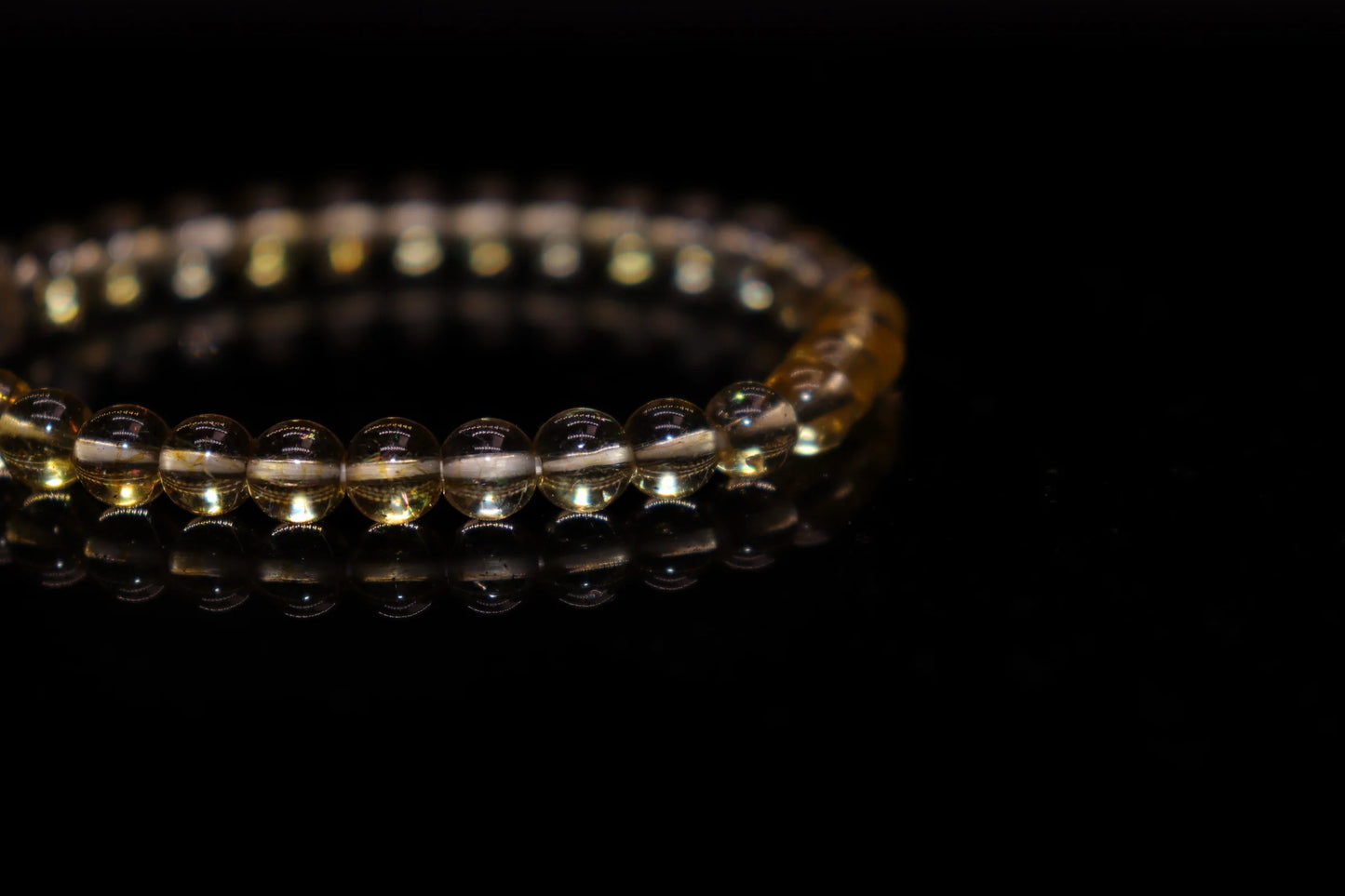
Citrine Silver Bracelet (6mm)
Citrine Silver Bracelet (6mm)
Couldn't load pickup availability
★ Custom - made according to your exact wrist size
★ Free shipping and returns
★ 30 - day satisfaction guarantee
★ Free resizing for new customers
Citrine beads (6 mm), paired with 925 Sterling Silver beads. Comes with a cotton pouch.
Citrine is transparent, with a clear lemon to honey yellow; the polished beads carry a bright vitreous luster, and as you turn them a faint dichroism shifts the gold between deeper and paler tones. Quartz has no cleavage and breaks with a conchoidal fracture; the golden hue comes from trace iron in the crystal lattice, and natural citrine's even, translucent body is simply how the stone grew. It looks like sunlight made solid — clear, warm, quietly radiant.
Stone Stories
- The colour of fortune: for centuries the golden quartz was the merchant's stone — kept in money boxes and purses to attract wealth, a tradition older than the word "citrine" itself, which entered English in the 14th century from the French citron, "lemon"
- Sunshine for November: citrine was officially added to the November birthstone list in 1952, beside topaz — the month of waning light receives a stone that looks like bottled sunshine; it also marks the thirteenth wedding anniversary
- Royal gold: from the 62.35-carat citrine ornament Cartier made for George VI's 1937 coronation to Prince Albert's 1848 Cairngorm brooch for Queen Victoria — crowns and queens have both worn it
- The "wealth stone" of Chinese custom: feng shui tradition calls it the fortune stone, favouring windfall luck, and sets it as money trees and pixiu figurines in the wealth corner – a custom kept alive for centuries
Sunlight, in Stone
There is a reason this stone wears the name of the lemon: it looks like light made solid. For centuries in Europe this golden quartz was the colour of fortune — merchants kept it in their money boxes, Scottish highlanders set it in their sword hilts for victory, and Victorian jewellers built whole brooches around the amber glow of cairngorm, the stone Prince Albert picked from the slopes of Lochnagar in 1848 and had made into a Celtic brooch for the Queen. In 1937, for the coronation of George VI, the house of Cartier cut a 62.35-carat citrine for the occasion. And when November comes and the sun grows shy, this is the birthstone of the month — a small pocket of sunshine to carry through the dark. Wear it, and keep a piece of daylight on your wrist.
Cultural Allusions
- The Roman engravers' golden quartz: yellow quartz entered gem use in the Hellenistic age (from about 300 BC); Roman citrine intaglios were carved with exceptional care, and a surviving Roman silver signet ring set with a citrine intaglio of a nude man with a dog shows the stone prized above ordinary seals — while the identity of Pliny's golden chrysolithus ("gold-stone") still keeps scholars debating.
- The first recipe for golden quartz: the 1st-century Greek historian Diodorus Siculus records crystal being heated in fire to imitate the golden gem chrysos — the earliest known account of making citrine by heat, two millennia before today's industry.
- Victoria's mountain brooch: after the court bought Balmoral in 1848, Prince Albert picked a golden cairngorm stone on the slopes of Lochnagar and had it made into a Celtic plaid brooch for the Queen — a keepsake preserved in the Royal Collection (RCIN 4806).
- Lalique's golden orchids: in the Art Nouveau years (c. 1903–04) René Lalique set a water-drop citrine at the heart of his "Orchids" diadem, now in the Gulbenkian Museum in Lisbon — the warm amber tone played against enamel and gold.
- Cartier and the kings: in the 1920s Cartier built Art Deco pieces around grand citrines, including the famous "mystery clock" with an octagonal citrine dial that belonged to the Dodge family; in 1937, for George VI's coronation, the London house created a 62.35-carat emerald-cut citrine ornament, designed to be worn as a brooch.
Did You Know?
- Named for the lemon: citrine comes from the Medieval Latin citrina — lemon-yellow — by way of the French citron; before the 16th century Europe knew it as "yellow topaz", and the confusion between the two gems lingered for centuries.
- The colour is iron: trace iron in the quartz gives citrine its golden hue, through charge transfer between Fe³⁺ and Fe²⁺ — and the deeper and richer the colour, the rarer the natural stone.
- The sun's own heat: nature herself sometimes bakes amethyst into gold — GIA reported natural citrine from the California–Nevada border formed exactly this way, cooked by volcanic heat.
- One mine in the world: Bolivia's Anahí mine is the only commercial source of ametrine — the half-amethyst, half-citrine bicolour — alongside natural citrine; its romantic "princess Anahí" legend, however, is a modern marketing tale. 不发布
- Queens and kings: Queen Victoria treasured citrine at Balmoral, and modern royals — Queen Máxima of the Netherlands, Queen Sonja of Norway and Queen Sirikit of Thailand — have all worn citrine jewellery.
Care
- Clean with warm soapy water and a soft brush or cloth — keep it away from strong chemicals, especially hydrofluoric acid, ammonium fluoride and alkaline solutions.
- Gentle on heat: no steam cleaning, for thermal shock can crack the stone and high heat can change its colour; avoid torches, long direct sun and sudden temperature changes.
- Ultrasonic cleaning is usually safe, but the gentlest hand is the wisest; dry it and store it separately in its soft pouch, away from harder gems.
- Put it on last: dress, apply perfume and cosmetics, then wear the bracelet — keep it clear of sprays and creams.
Wear your story.