VISAXUM
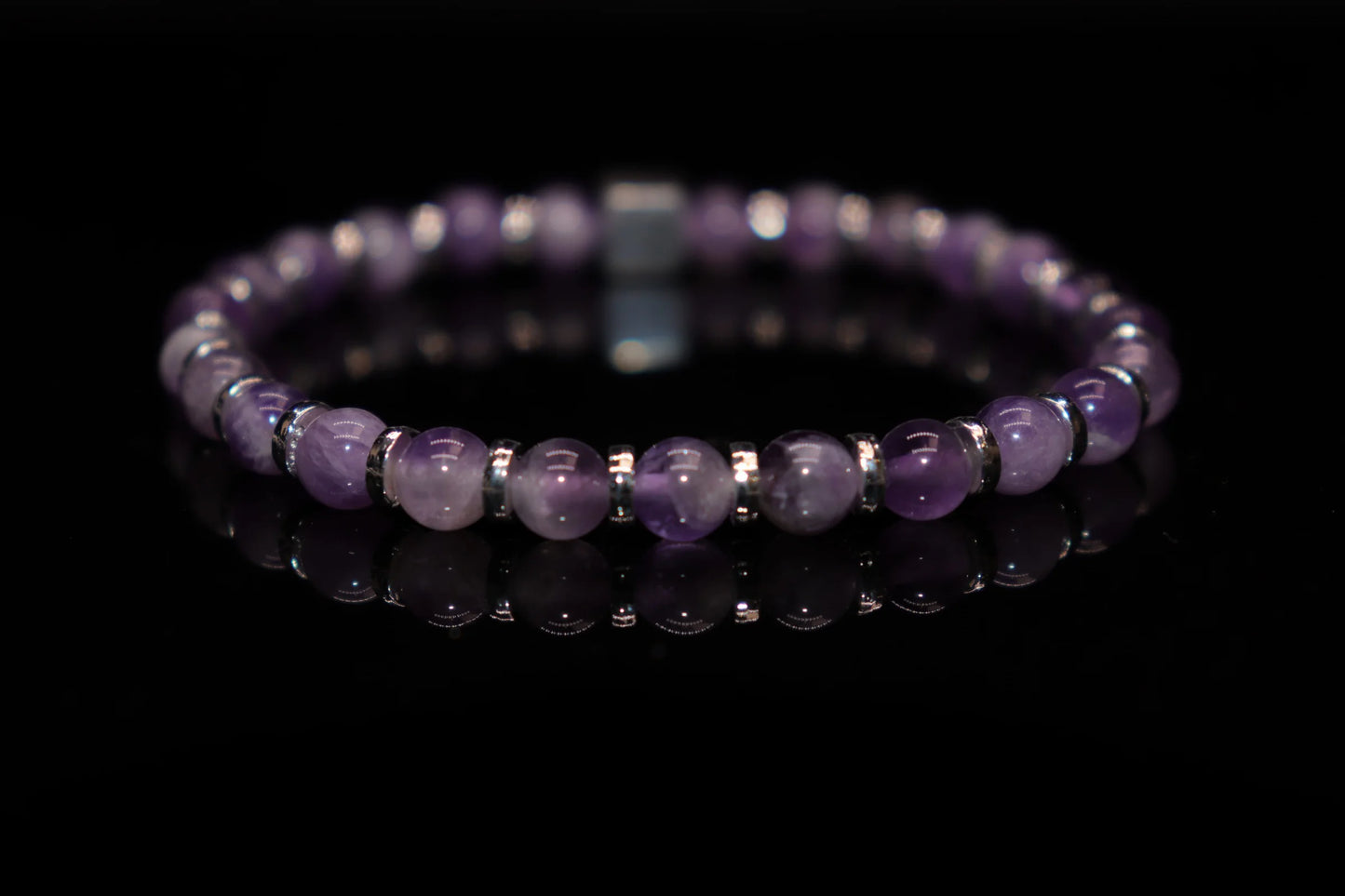
Cloud - like Amethyst Silver Bracelet (6mm)
Cloud - like Amethyst Silver Bracelet (6mm)
Couldn't load pickup availability
★ Custom - made according to your exact wrist size
★ Free shipping and returns
★ 30 - day satisfaction guarantee
★ Free resizing for new customers
Cloud-like amethyst beads (6 mm), paired with 925 Sterling Silver beads. Comes with a cotton pouch.
Cloud-like amethyst beads show a glassy sheen over a violet base, the colour drifting between deep purple and pale lavender as they turn in the light. Within each bead float soft, cloud-like veils of white – milky quartz zones and natural inclusions, the quiet record of the stone's slow growth. The sheen is like morning mist settling into royal purple: hushed, serene, and quietly noble.
Stone Stories
- Long linked with calm and clarity – a quiet reminder of your own stillness
- Named by the Greeks amethystos, "not drunk": the goblet stone of a clear head among the revels
- Prized by the Romans as "the eyelid of Venus" – an emblem of love returned
- Linked with the crown and the third eye, the seats of higher vision – a companion for quiet hours of reflection
- The "Bishop's Stone" of the medieval church, and a February birthstone treasured by queens from Catherine the Great to the Duchess of Windsor
The Purple of Dawn, the Stillness of Wine
Within each bead drift soft, cloud-like veils of white – as if morning mist had been caught inside the violet, stilled into stone. Legend tells of a maiden turned to pure white crystal to escape the wine god's pursuit, and of the god himself, moved with remorse, pouring his wine over the stone and staining it purple forever. The ancient Greeks called the stone amethystos – "not drunk" – and carved it into goblets that promised a clear head among the revels. The Romans loved it as "the eyelid of Venus", an emblem of love returned; the medieval Church set it in bishops' rings as a pledge of sobriety and faith; and crowns across Europe were born purple, the colour of kings and saints. To wear it is to carry that stillness with you – the calm of a mind that has chosen clarity, the quiet strength of one who knows when to pause, breathe, and see clearly.
Cultural Allusions
- In Greek and Roman antiquity, amethyst was believed to guard against intoxication; the Roman naturalist Pliny the Elder records that it was also called "anteros" – love returned – and "the eyelid of Venus", and used in love charms.
- The best-known origin myth tells of the maiden Amethyste, turned to white stone to escape the wine god Bacchus, who then poured his wine over her and dyed the stone purple. (The tale was written in the 16th century by the French poet Rémy Belleau, drawing on ancient Greek motifs.)
- From the medieval Church onward, amethyst became the "Bishop's Stone", set in episcopal rings; in the Book of Exodus it sits in the high priest's breastplate, and in Revelation among the twelve foundation stones of the New Jerusalem.
- Egyptian jewelers of the Middle Kingdom carved amethyst from the Wadi el-Hudi mines into scarabs – symbols of the sun god's rebirth; in modern times, Catherine the Great loved amethyst jewellery, and Cartier created a legendary amethyst necklace for the Duchess of Windsor.
- In Chinese tradition, "purple mist comes from the east" (紫气东来) – the auspicious sign that announced the arrival of the sage Laozi – has made purple the colour of wisdom and good fortune.
Did You Know?
- Amethyst is the purple variety of quartz; its colour comes from trace iron, tinted by natural radiation over millions of years.
- Heat amethyst to about 400–450 °C and the purple fades to yellow – a gentle alchemy, for the golden quartz we call citrine is born of the very same stone.
- Before Brazil's great mines were found in the 19th century, amethyst was rare enough to rank beside ruby and emerald; today the royal purple shines as brightly as ever in the finest jewellery of our time.
- "Cloud amethyst" refers to amethyst carrying soft, white, cloud-like inclusions – the same mineral, dressed in morning mist.
- The famous "Delhi Purple Sapphire" at London's Natural History Museum is in fact an amethyst – misnamed for centuries.
Care
- With a hardness of 7, amethyst suits everyday wear, but protect it from hard knocks and sharp contact.
- Prolonged direct sunlight can fade lighter stones – keep it away from windowsills and long exposure outdoors.
- Clean with warm soapy water and a soft cloth; avoid harsh chemicals, perfume, and sudden temperature changes.
- Store separately to prevent scratching, and keep the silver bead in an anti-tarnish pouch.
Wear your story.